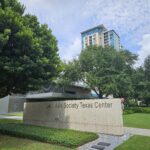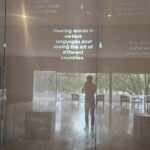

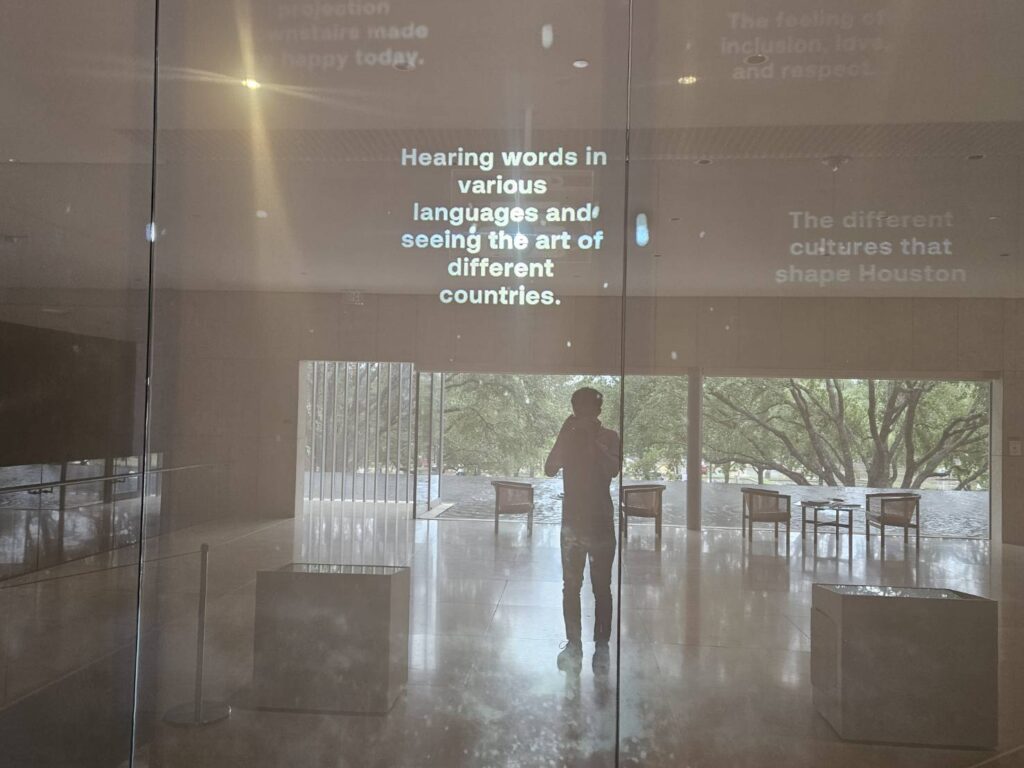
第一次走進亞洲協會德州中心,便驚艷於建築的寬敞與採光,視覺感受相當舒服。沿著樓梯往二樓走後,會看到一整面的互動投影幕,訪客可以在觸控機器輸入「文化交流」的相關文字感想,送出後就會投影在牆上,時而出現,時而消失。靜靜地站在投影幕前欣賞這些字句,完全可以了解訪客的心情與態度。休士頓是美國人口背景最多元的城市之一,因鄰近墨西哥而有很龐大的拉丁裔族群,和其他美國南部的州別一樣有很多非洲裔人口,也有很多亞洲裔移民。當然,更多的是擁有不同族裔背景的血緣,並不是粗魯的單一標籤能夠概括的。由此可見,休士頓是見習文化交流絕佳的場所,亞洲協會德州中心在其中扮演了重要的角色。
我們來到亞洲協會德州中心的第一件事,是協助8至13歲孩童參與小小記者營。在這個為期五天的營隊當中,孩子們練習如何提出好的問題、如何進行採訪、如何使用錄影機記錄訪問過程,並融入與亞洲元素相關的主題,跟主題講者互動,在學習文化的同時也練習提問。以下分別敘述我在各個講題所觀察到的事物。
以舞蹈為媒介——社會運動當代舞蹈劇場、孔雀舞者
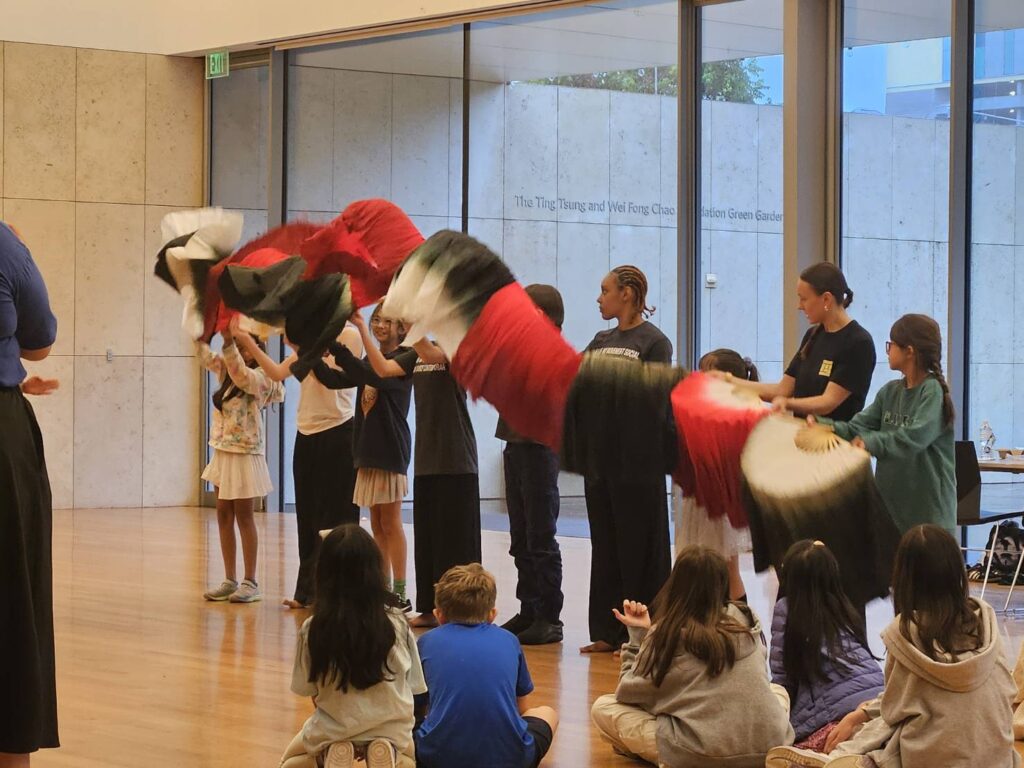
星期三孩子們欣賞了兩種截然不同的舞蹈。來自社會運動當代舞蹈劇場的五位舞者表演扇舞,另外還有一位身穿孔雀衣的舞者。兩組舞者皆邀請孩子站起來伸展身體,實際操作動作,孩子尤其在拿到扇子的當下表現出興奮的笑容。當一位舞者被孩子詢問舞蹈的意義是什麼的時候,他回答說:「舞蹈是表達自我的方式」,也許孩子需要花時間才能體會與理解這個回覆。
以音樂為媒介——演唱家Destiny Cannon
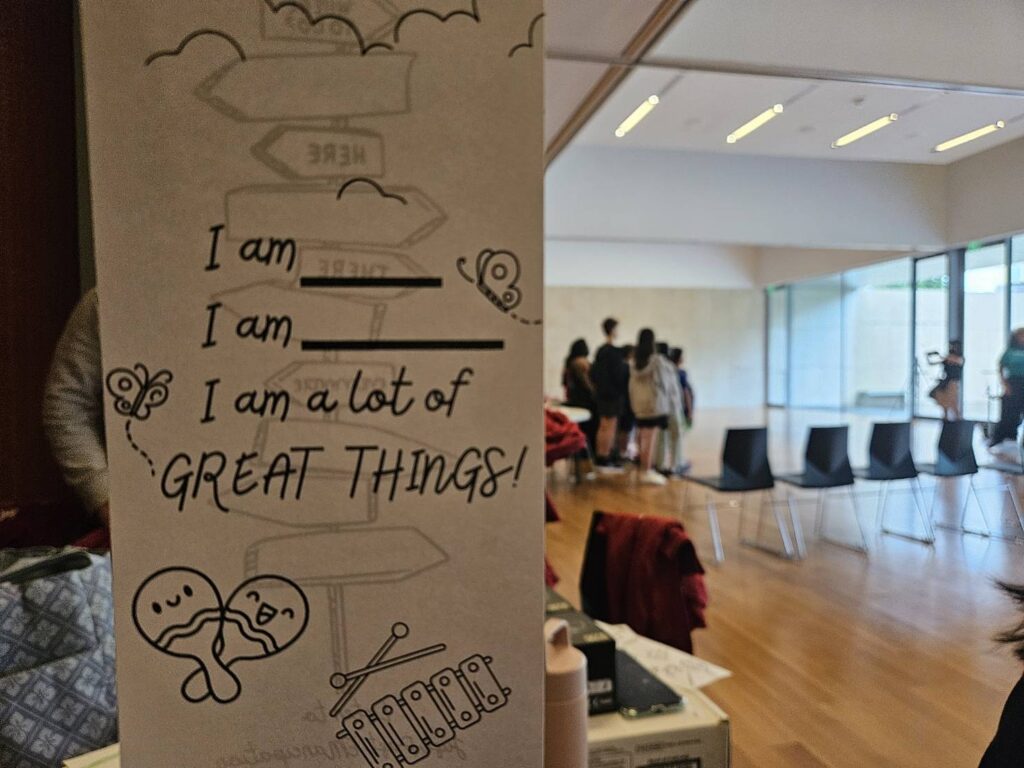
星期四上午由非裔演唱家Destiny Cannon主講,他先以Emancipation、Malevolent、Ancestral、Resilience等關鍵字介紹了黑人民權運動的來龍去脈,再展示許多精心準備的樂器供學生把玩,最後齊心演唱動人的創作歌曲〈Just Past Emancipation〉,歌詞I am kind. I am honest. I am a lot of things既溫暖又給人力量。很喜歡講者在課堂中的一些話語,像是「音樂讓我解放」、「音樂是我為自己文化說故事的媒介」,最讓我印象深刻的是「亞洲協會不僅是和亞洲有關,更多的是多元文化的兼容並蓄」。在這個營隊裡,來自不同家庭、族裔背景的小孩聚集於此,不因種族、口音、性別、長相而受差別待遇,人與人的互動在這邊是自然且彼此尊重的。我認為這是台灣孩子在成長中較無法體會到的部分。
台灣與端午節介紹
因為星期五早上是我們負責的環節,所以我們較前幾日早了一個小時抵達,剛好遇上孩子們暖身的遊戲時間。每天早上集合後,都會先玩一個叫做「黑手黨(Mafia)」的遊戲。這個遊戲像是簡易版的狼人殺,由主持人在大家閉眼時選擇特定人數的參與者扮演黑手黨成員,待黑手黨成員認清彼此身分後,在所有人張眼聊天的時候以眨眼的方式暗殺他人,而且要小心不能被其他人發現。最後進入投票環節,若投出來最高票的參與者不是黑手黨成員的話黑手黨成員就勝利了。我發現這個年紀的小孩很喜歡玩這個遊戲,過程中都相當投入,積極地觀察與猜測到底誰是黑手黨成員。除了活絡氣氛之外,此遊戲還讓孩子們有機會和他人有眼神接觸、口頭互動、認識名字等多種好處,可說是相當適切的暖身活動。
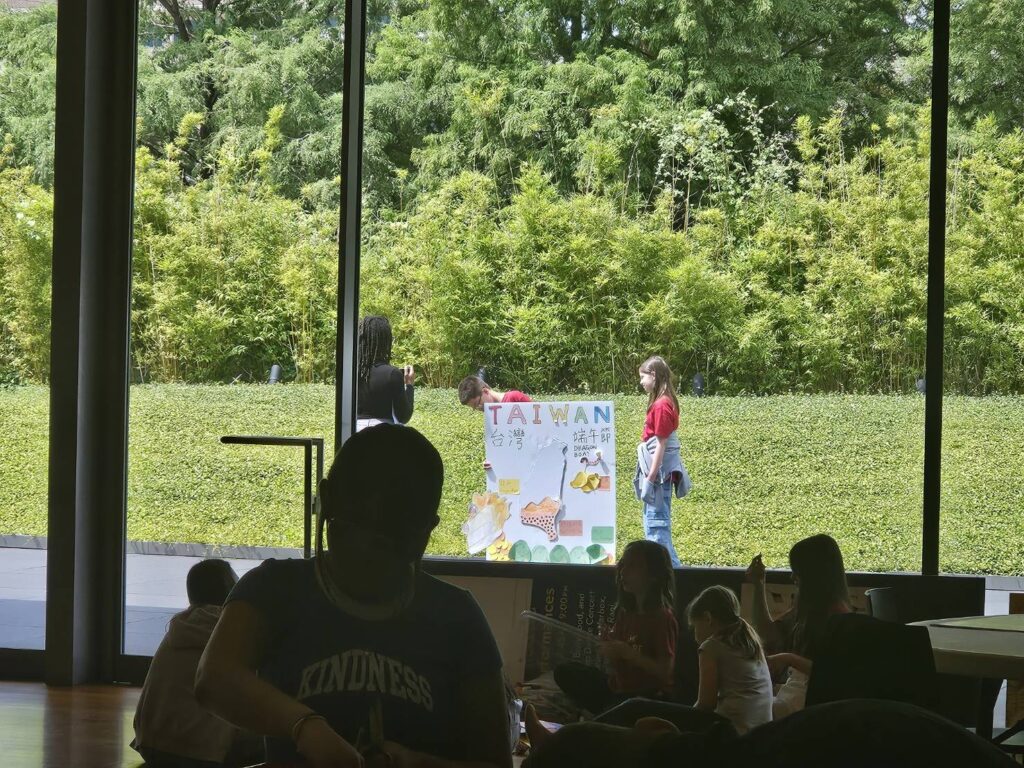
暖身活動結束後,舞台就屬於我和另一位錄取者的了。我們行前線上討論便曾思考過可以帶孩子做什麼活動,其中一項是文化和節慶。由於端午節剛過,我們選定端午節為主題進行介紹。一開始,我先詢問孩子對於「台灣」的印象為何、有沒有什麼字可以形容。孩子們非常踴躍舉手回答,有飲料、忙碌、綠能等關鍵字。我接著秀出世界地圖,請他們指出美國和台灣的位置分別為何,建立地理基本概念,然後用四個關鍵字「珍珠奶茶」、「水果王國」、「捷安特腳踏車」、「手機晶片」當作台灣特色,並且指出台灣文化受到中國、日本、東南亞、西方多重影響,而我們今天要認識一個重要節日——端午節。我簡單地在看圖問答中解釋了屈原的故事後,另一位錄取者詳細介紹各種粽子、龍舟比賽、立蛋,特別是有讓孩子實際玩立蛋。看到一組組孩子們齊心協力完成任務,讓我想起去年九月實習觀高二某一節英文課Marshmallow Challenge的興奮之情。在橡皮擦屑的幫助下,每一組最終都成功完成立蛋。
成果發表大會——亞洲協會新聞台
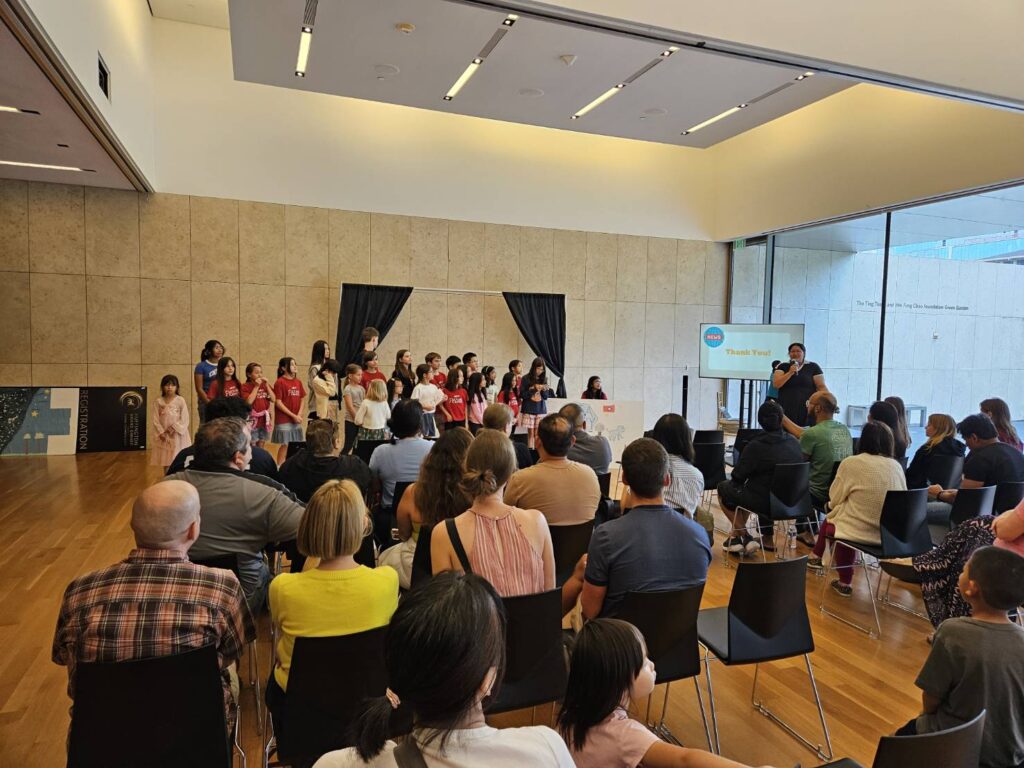
星期五的最後是孩子們這一週營隊的成果發表大會,他們實際化身為亞洲協會電視台的記者,向家長播報這週的學習內容。其中一位擔任主播的孩子還穿了小西裝,在主播台上串接各項分享。每一位上台的孩子,一手拿著麥克風,一手拿著講稿,幾乎沒有顯露任何膽怯,很自在地、開心地和觀眾分享自己撰寫的見聞。
從這次的成果發表大會,可以看出這群家長的高度參與,而且是攜家帶眷盛大出席。孩子們發表當下,家長拿著手機伸長手錄影,記錄這珍貴的一刻。發表結束後,全家一起一邊吃著亞洲協會提供的印度冰淇淋,一邊踴躍和營隊主辦者聊天、分享孩子的表現。這讓我想起去年實習時九月參與的家長會,完全可以從家長的眼神和舉止看見孩子的影子,體現家庭教育的重要性。
Day 5 June 13 How to Tell Stories through Lenses? Lights, Camera, Asia! Young Journalists Camp
When walking into the Asia Society Texas Center for the very first time, I was impressed by the spaciousness of the building and the lighting, which made me feel very comfortable. As one walk up the stairs to the second floor, one will see an interactive projection screen. Visitors can enter their thoughts on “cultural exchange” into the touch screen, and the words will be projected on the wall, appearing and disappearing as they are sent out. Standing quietly in front of the screen and admiring these words, one can fully understand the mood and attitude of the visitors. Houston is one of the most diverse cities in the United States, with a large Latino population due to its proximity to Mexico, a large African-American population, and a large number of Asian immigrants, as in other southern states. Of course, there are many more ethnic backgrounds than can be summarized in a single, crude label. As you can see, Houston is a great place to learn about cultural exchange, and the Asia Society Texas Center plays an important role in that.
One of the first things we did when we came to the Asia Society Texas Center was to assist children between the ages of 8 and 13 to participate in the Young Journalist Camp. During this five-day camp, the children practiced asking good questions, conducting interviews, recording interviews on video cameras, incorporating Asian themes, interacting with keynote speakers, and practicing asking questions while learning about the culture. The following is a description of what I observed in each topic.
Dance as Vehicle—Social Movement Contemporary Dance Theater & Peacock Dancer
On Wednesday, the kids were treated to two very different dances. Five dancers from the Social Movement Contemporary Dance Theater performed a fan dance, and another dancer in a peacock costume. Both groups of dancers invited the kids to stand up, stretch and practise the movements, with the kids smiling with excitement, especially when they were handed the fan. When one of the dancers was asked by a kid what the meaning of dance was, he replied, “Dance is a way of expressing oneself,” a reply that may take time for kids to realize and understand.
Music as Vehicle—Destiny Cannon
On Thursday morning, Destiny Cannon, an African-American singer, gave a talk on the origins of the black civil rights movement using key words such as Emancipation, Malevolent, Ancestral, Resilience. She then showed many well-prepared instruments for the kids to play, and then sang the moving song ‘Just Past Emancipation’ together, with the lyrics ‘I am kind, I am honest, I am a lot of things’ both warm and empowering. I liked some of the quotes from the speakers in the class, such as “music makes me feel emancipated”, “music is a vehicle to tell stories about my culture.” The one that struck me the most was that “Asia Society is not only about Asia, but also about multiculturalism”. In this camp, children from different families and ethnic backgrounds come together and are not treated differently based on race, accent, gender, or looks; human interaction is natural and respectful. I think this is a part of growing up that Taiwanese children lack the opportunity to realize.
Introduction to Taiwan & Dragon Boat Festival
Since Friday morning was our session, we arrived an hour earlier than the previous days, just in time for the children’s warm-up playtime. Each morning, we gathered and played a game called “Mafia.” This game is like a simple version of Werewolf Killing, where the host chooses a specific number of participants to play the role of Mafia members when everyone’s eyes are closed. After the Mafia members recognize each other’s identities, they will blink to assassinate others while everyone’s eyes are open and chatting, and they have to be careful not to be detected by the others. Finally, there is a vote, and if the top vote-getter is not a Mafia member, the Mafia member wins. I found that children of this age enjoyed playing this game and were very engaged in the process, actively observing and guessing who the mafia members were. In addition to creating a lively atmosphere, the game also gave the children a chance to make eye contact with others, interact verbally, recognize names, and many other benefits, making it a very appropriate warm-up activity.
After the warm-up, the stage was set for the other applicant. In our pre-trip online discussion, we had thought about what activities we could do with our children, and one of them was culture and festivals. Since the Dragon Boat Festival had just passed, we chose the Dragon Boat Festival as the theme for our presentation. At the beginning, I asked the children what their impression on “Taiwan” was and if there was a word to describe it. The children were very enthusiastic in raising their hands and answered with key words such as beverage, busy, and green energy. I then showed them a world map and asked them to point out the locations of the United States and Taiwan to establish a basic concept of geography. I then used four key words, “Pearl Milk Tea,” “Kingdom of Fruits,” “Giant Bicycle,” and “Chip on the Cell Phone,” as characteristics of Taiwan, and pointed out that Taiwan’s culture has been influenced by China, Japan, Southeast Asia, and the West. Today we are going to learn about an important festival, the Dragon Boat Festival. After I briefly explained the story of Qu Yuan in the picture quiz, the other applicant introduced various kinds of rice dumplings, dragon boat races, and egg laying, especially allowing children to actually play with egg laying. Seeing groups of children working together to accomplish their tasks reminded me of the excitement I felt last September when I observed the Marshmallow Challenge in one of the English classes during educational internship. With the help of the eraser shavings, each group was able to complete the task successfully.
Final Presentation—Asia Society News
Friday ended with a presentation of the children’s week’s camp accomplishments, where they actually became reporters for Asia Society Television, broadcasting what they had learned during the week to their parents. One of the children, who was the anchor, wore a cute suit and took to the podium to relay the information. With a microphone in one hand and a script in the other, each child on stage showed little fear and was comfortable and open to sharing his or her writing with the audience.
The high level of parental participation in this presentation was evident in the fact that the parents were present with their families. While the children were presenting, the parents held their cell phones and stretched their hands to record this precious moment. After the presentation, the whole family ate Indian ice-cream provided by the Asia Society and chatted with the camp organizers about their children’s performance. It reminded me of the parent-teacher conference I attended in September during my internship last year. I could see the reflection of my children in the parents’ eyes and behavior, which demonstrated the importance of family education.